Decontaminate
Road film, iron, and bonded debris are removed before polishing.
 Fine DetailsAuto Spa · Dickinson, NDRequest a quote
 Real correction reduces visible defects instead of hiding them with fillers. We inspect the paint, prove the process with a test spot, and protect the result.
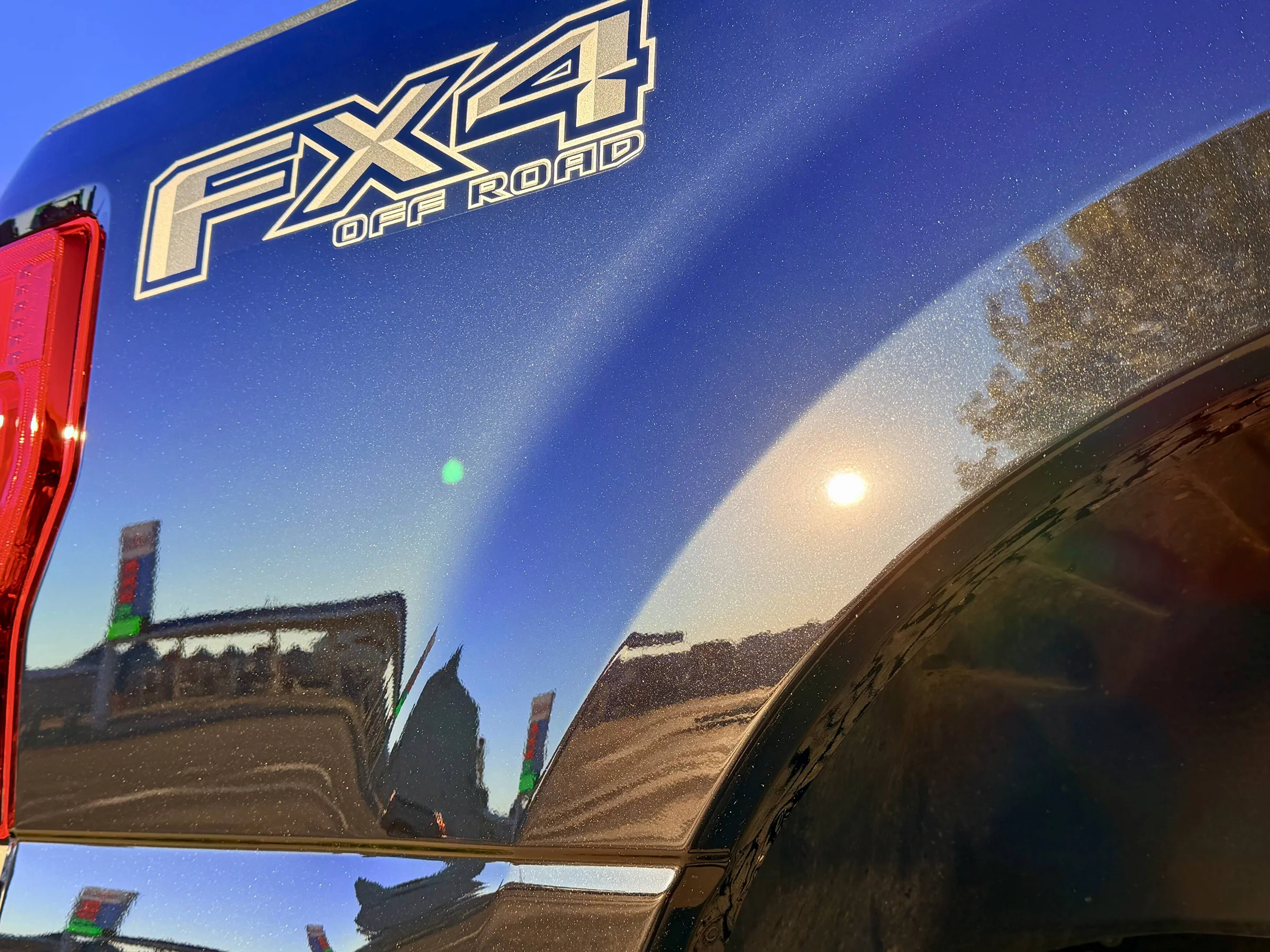
Swirls, wash marring, haze, oxidation, water spotting, and previous polishing all change how paint responds. The process starts with inspection—not a promise that every scratch will disappear.
Fine Details uses controlled lighting, paint-depth measurements where appropriate, and measured test spots to select the least aggressive safe process that reaches the goal.
Road film, iron, and bonded debris are removed before polishing.
We document condition, repair history where visible, and paint depth.
A small area confirms the pad, polish, machine, and correction level.
The finish receives the measured polishing stages needed for the selected result.
The corrected paint is protected, cured, and checked under multiple lighting angles.
Direct prairie sun, salt film, gravel dust, and hard-water spotting expose shortcuts quickly. We judge the finish under focused inspection lighting and real-world angles.
No responsible correction should promise that. Workable defects can often be reduced or removed, while scratches that are too deep remain to preserve paint safety.
Sometimes. Transport, dealership washing, delivery preparation, and factory finishing can leave defects. New paint is inspected first.
The studio window includes decontamination, inspection, test spots, careful polishing, coating preparation, cure time, and final quality control.
No. Wax adds temporary gloss and protection. Correction mechanically refines defects, then Fine Details protects the corrected surface.
Send the vehicle details, current condition, and the result you want. Fine Details will review the request before confirming the plan and timing.